hdfc mycards
A smarter way to manage every card you own
MENTOR
HDFC Bank
type
FinTech
Product Design
Mobile App Redesign
UX Research
team
Manasvi Shah
(Jan - Apr 2024)
MY contribution
UI/UX Design
UX Research
Prototyping
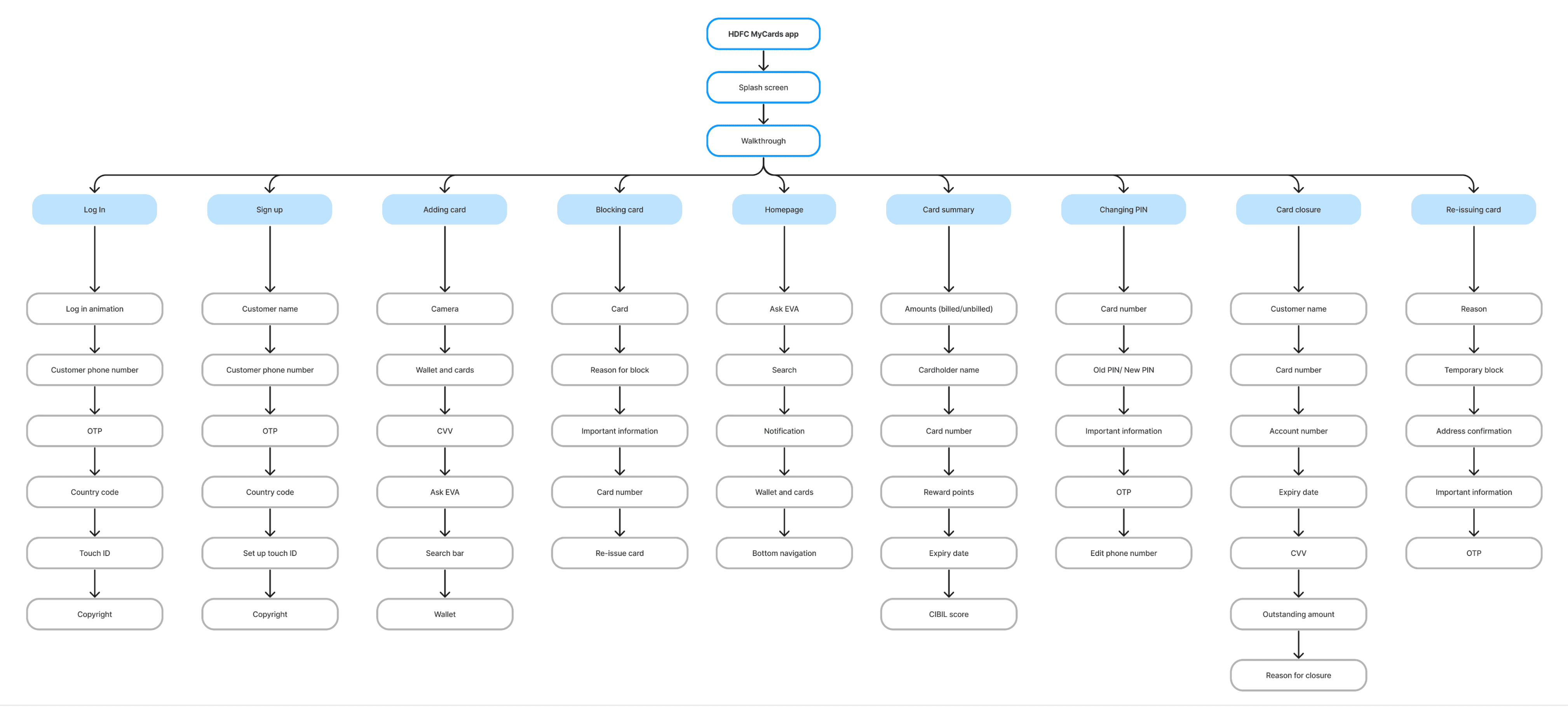
System Design
overview
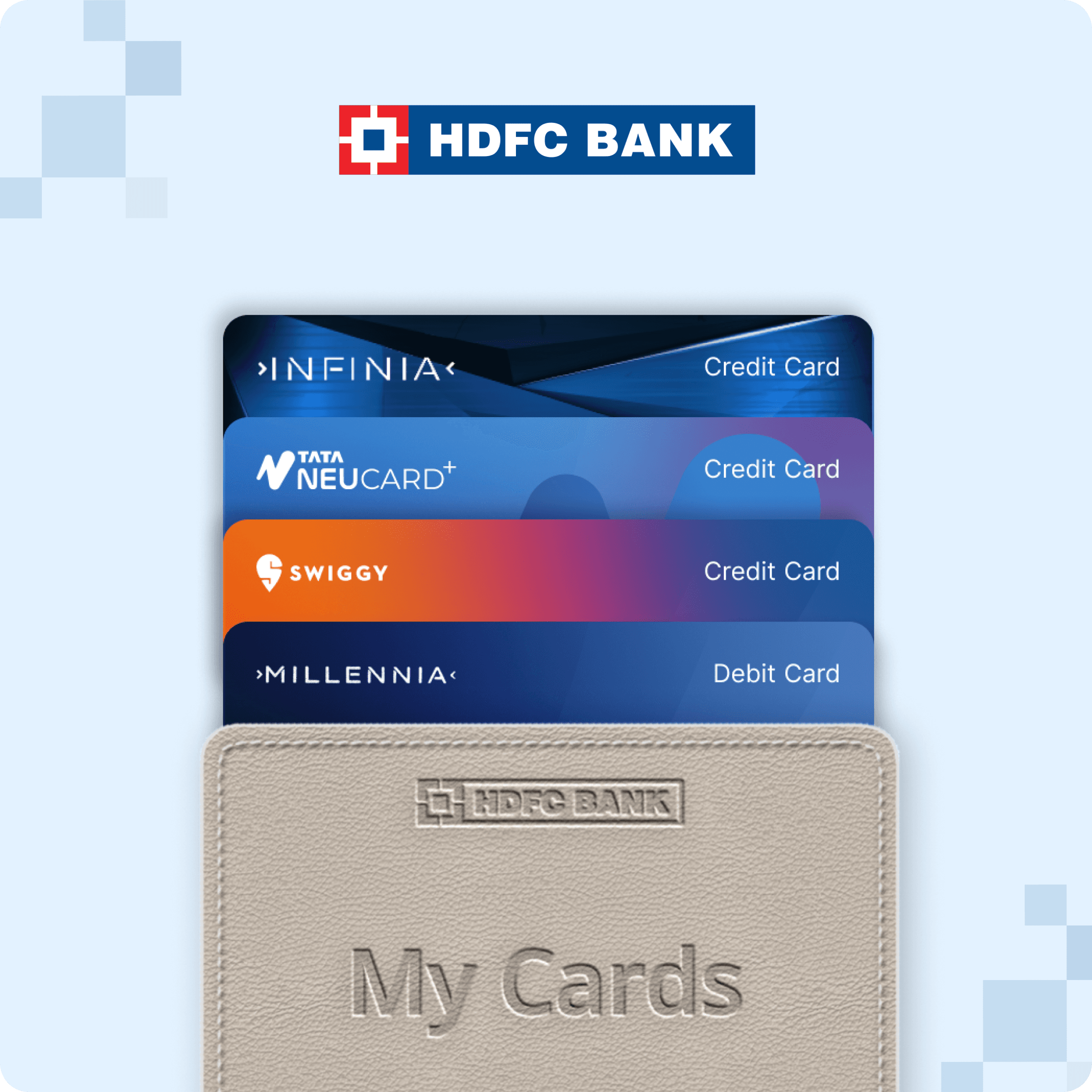
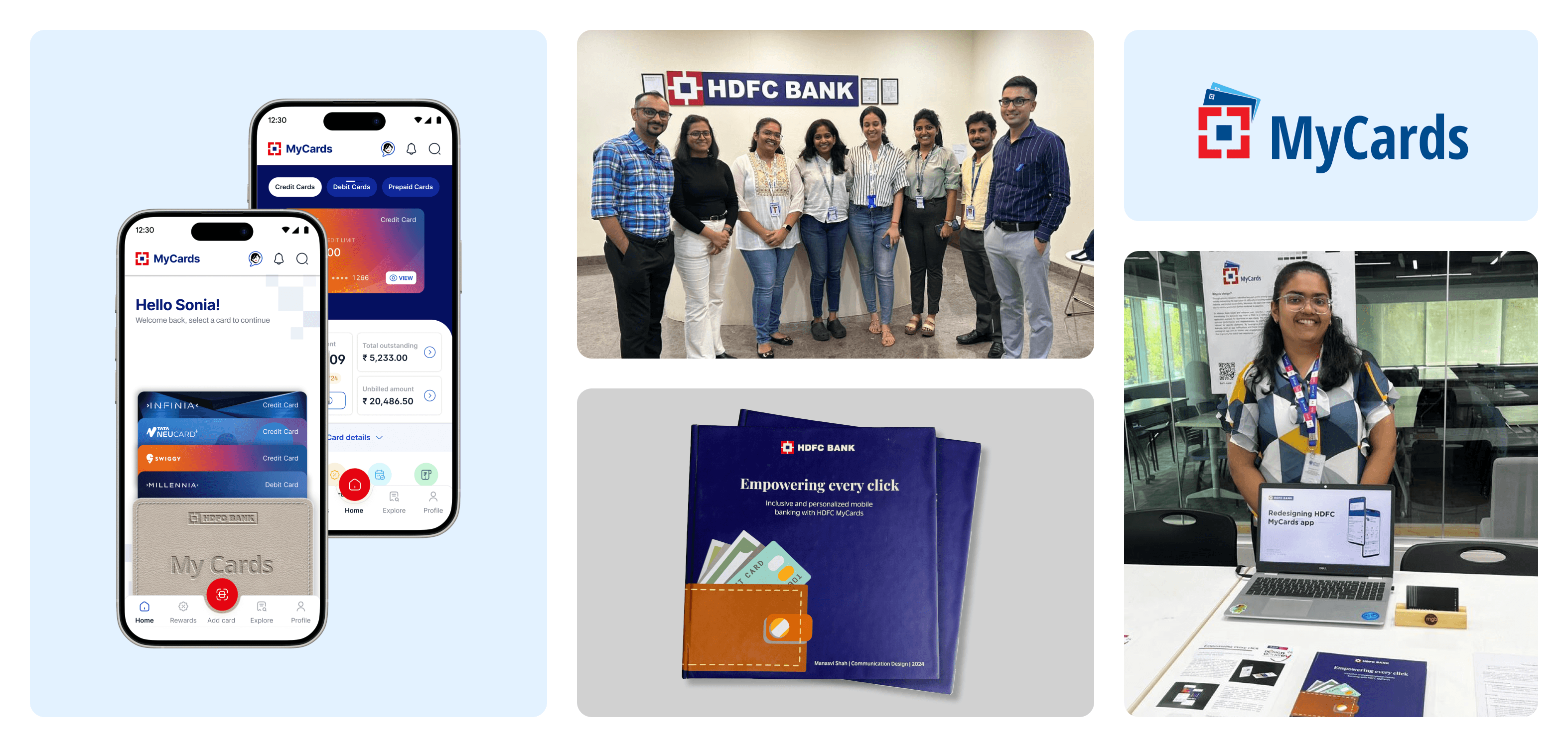
HDFC MyCards is one of India's most widely used credit card management apps. It handles payments, transaction history, card settings, offers, and more for millions of users. During my internship at HDFC Bank, I was given the opportunity to redesign it.
This was not a speculative brief. There were brand constraints, product stakeholders, and real users whose feedback shaped every decision. It was my first time designing inside a system that already existed at scale, and that changed how I think about design entirely.
context
Most design projects start with a blank canvas. This one started with a live product used by millions of people and a four-month window to make it meaningfully better.
I joined HDFC Bank as a UI/UX design intern in my final year at ISDI Mumbai. The MyCards redesign became my capstone project, which meant it had to satisfy two sets of requirements: the bank's product and brand standards, and the rigor expected of a graduating design student. I worked mostly independently, with check-ins from the product team and UX leads who kept the work grounded in what was technically feasible and brand-appropriate.
The constraint that shaped everything: I could not rebuild the product from scratch. I had to work with what existed, understand why it was the way it was, and make targeted changes that would actually ship.
004C8F
004C8F
before
after
the problem
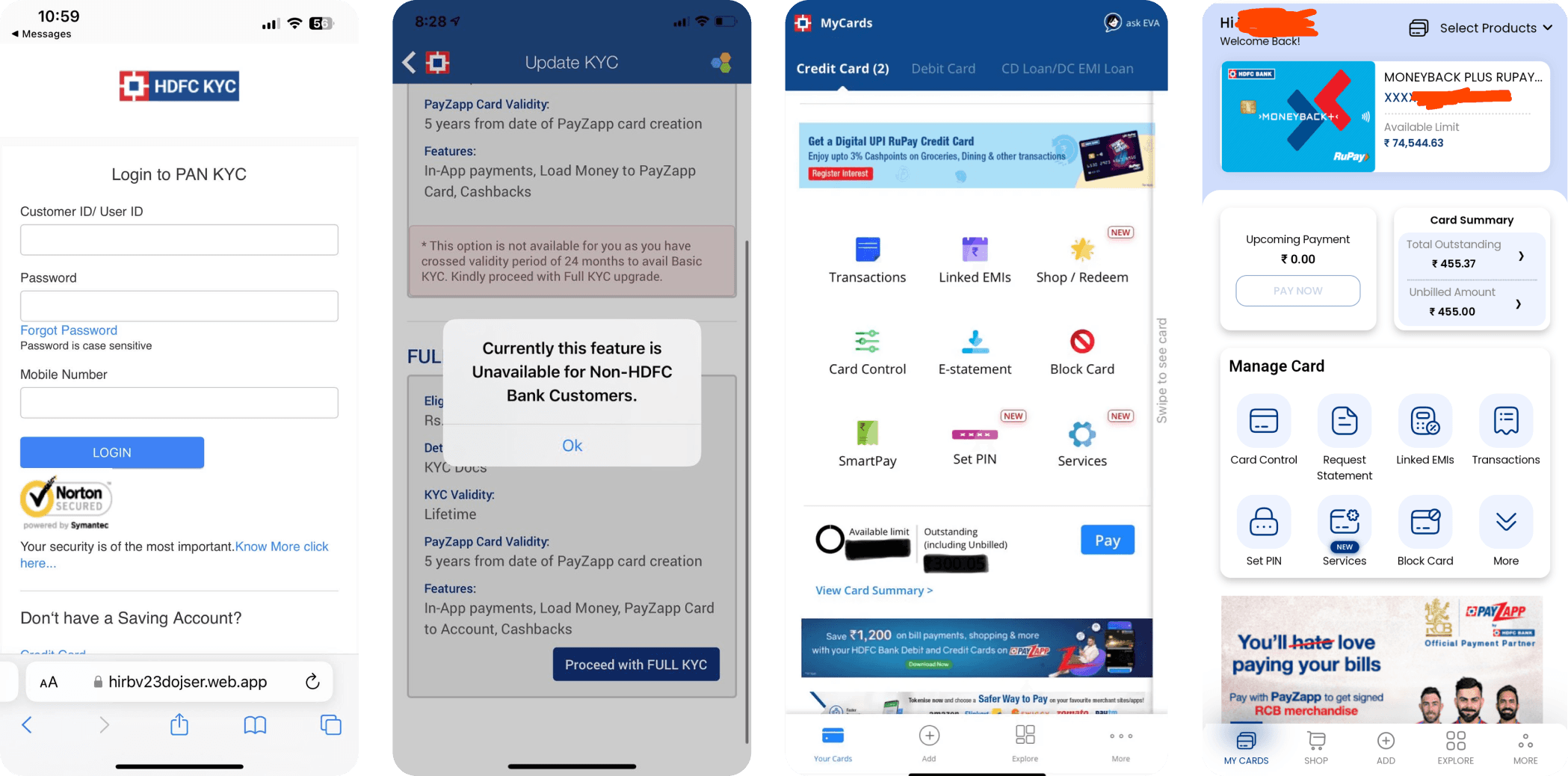
The MyCards app worked. That was the problem.
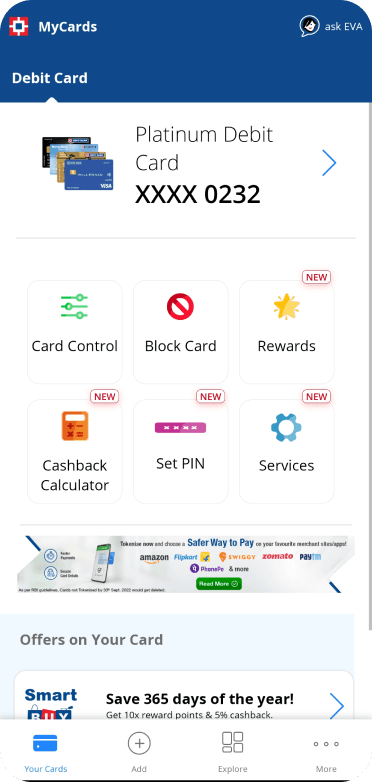
Because it functioned, the deeper friction went unexamined for a long time. The interface was dated but familiar. The navigation was cluttered but learnable. The call-to-actions were unclear but users eventually figured them out. Good enough is the hardest brief to fix because it requires convincing people that there is a better version of something they have already accepted.
Four problems kept surfacing once I started looking closely. The visual design felt old in a way that quietly communicated unreliability to new users. Navigation between core features like transaction history, card settings, and offers required too many steps. Key actions like paying a bill or activating a new card were buried or mislabeled. And the app treated every user the same, whether they had one card or five, spent on travel or groceries, or were logging in for the first time or the hundredth.
The research question I kept returning to: how do you make a financial app feel personal without making it feel like it knows too much about you?
research
I ran user surveys and usability tests across two rounds, and supplemented both with a competitive analysis of how other card management apps approach navigation, personalization, and transaction visibility.
The surveys gave me directional data. Users were not angry at the app. They were indifferent to it, which is worse. Most said they opened it only when they had to, completed their task with some friction, and closed it immediately. Nobody was using the offers section. Nobody was exploring.
The usability tests showed me exactly where the drop-offs were happening. The path to paying a bill had one more step than it needed. The card settings screen mixed urgent actions with rarely used ones and gave them equal visual weight. The home screen tried to show everything and ended up communicating nothing.
The competitive analysis pointed to a consistent pattern in apps that worked well: they made the most common action the most obvious one, and they used personalization to reduce noise rather than add to it.
task completion time - before and after redesign
before
after
6 min
5min
4 min
3 min
2 min
1 min
0 min
pay a bill
view transactions
activate a card
find an offer
change card limit
design decision
The redesign came down to three decisions that everything else followed from.
The first was hierarchy over completeness. The original app tried to surface everything at once. The redesign organized actions by frequency and urgency, so the thing a user needed most was always the easiest thing to reach. Less on screen, but the right things.
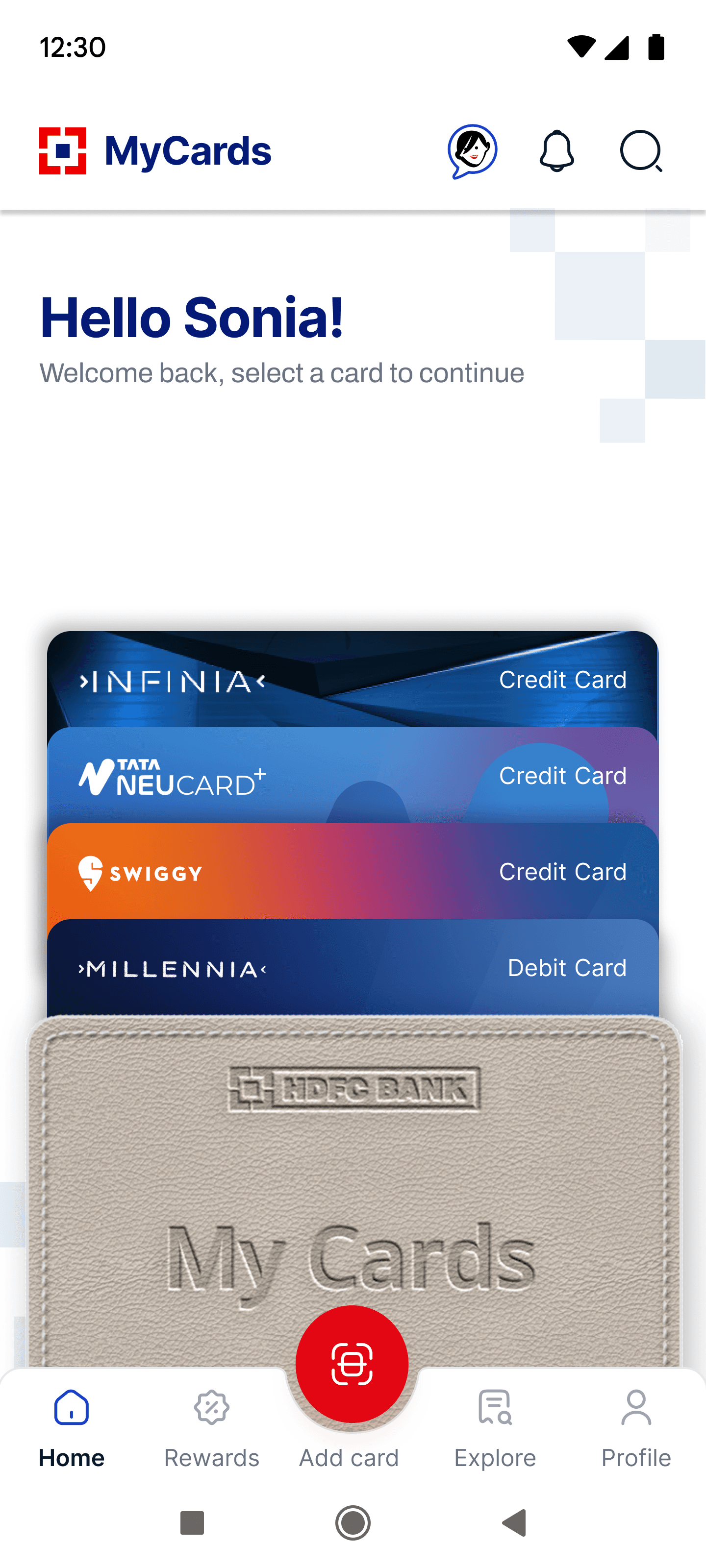
The second was making the card itself the anchor. Credit card apps often bury the card. In the redesign the card sits at the center of the home screen and becomes the navigational starting point. Tapping into a card takes you to everything related to it: balance, transactions, settings, offers. The mental model matches how users actually think about their finances.
The third was personalization through behavior, not through asking. The app surfaces tailored offers and spending insights based on how a user actually uses their cards. It does not ask for preferences upfront. It learns quietly and reflects that back in a way that feels useful, not invasive.
The HDFC brand identity stayed intact throughout. Color, typography, and tone were treated as constraints to design within, not obstacles to work around.
redesign
The final product is a cleaner, faster, more navigable version of an app that already had millions of users relying on it.
The home screen leads with the user's primary card and a clear summary of their balance and recent activity. Secondary cards are accessible without leaving the screen. The navigation has been simplified to four core areas: Cards, Transactions, Offers, and Settings. Every call-to-action uses language that matches what the user is trying to do, not what the bank calls the feature internally.
Transaction history is detailed and filterable. Users can see not just what they spent but where, when, and how it fits into their patterns over time. The offers section is no longer a generic catalog. It reflects the user's spending categories and surfaces things that are actually relevant.
Usability testing in the second round showed meaningful improvement in task completion time and a significant drop in confusion around key actions. More importantly, users described the app as feeling current, which in a financial product is code for trustworthy.
reflections
Designing inside a real company is different from designing for a brief. The constraints are not hypothetical. The stakeholders have opinions that matter. The brand is not yours to reinvent.
What I learned is that those constraints are not limitations. They are the thing that makes the work real. Every decision I made had to survive a conversation with someone who knew the product better than I did, understood the user base at a scale I had no access to, and had shipped things before. That is a different kind of pressure than a classroom deadline, and it made the work better.
I also learned that redesigning something that already exists requires a different kind of confidence than building from scratch. You have to be willing to argue for changes to things that technically work, explain why good enough is not good enough, and do it with evidence rather than instinct. Research gave me the standing to do that.
The iterative loop, survey, test, revise, test again, is not glamorous, but it is where the actual design happens.
HDFC MyCards was a capstone project completed during a real internship at HDFC Bank. All redesign decisions were developed within actual brand and product constraints. Research was conducted with real users.
Manasvi Shah © 2026