memo
Turning memories into immersive experiences
MENTOR
Blake Hudelson
type
Spatial UI Design
VR Experience Design
Branding
AI Interaction
team
Manasvi Shah + 2 Designers
(Aug - Dec 2025)
MY contribution
UI Design
UX Research
Branding
Spatial Interface Design
overview
We all have moments we want to hold onto. A sound. A place. A feeling that seemed to last forever and then slipped away.
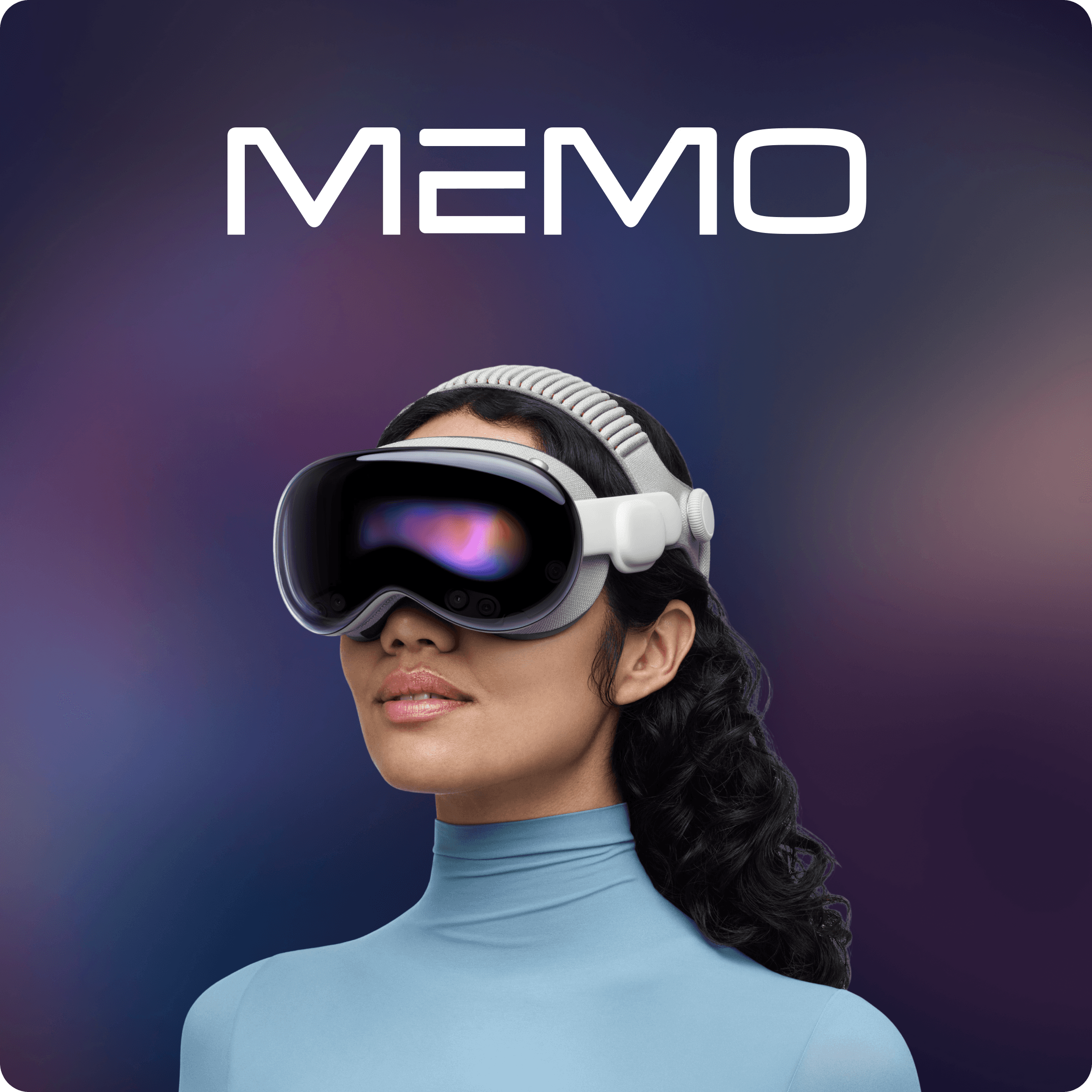
Memo is a memory platform for Apple Vision Pro that transforms a photo, a short clip, or a sound into an immersive environment you can step back inside. You do not just watch a memory. You walk through it, feel it, and experience it again as if time never moved forward.
My contributions spanned the full design stack: UX research to understand how people relate to their memories, brand and visual identity to give Memo its emotional register, and UI design across both the mobile and spatial interfaces.
the problem
Photos fade. Videos feel flat. And nothing that exists today actually lets you feel a memory again.
Modern memory tools have one job: storage. Your camera roll stores moments. Social media archives them. Cloud services back them up. But none of them ask the question that actually matters.
What if you could go back?
Capture
Upload photos, videos, or voice notes. Anything that matters.
Memory Creation
Memo instantly creates a sharable video using Memo AI.
Reliving
Step inside your moments using VR glasses and relive them like never before.
Share & Collaborate
Invite friends and family to co-create, add layers, or explore your stories together.
We started with people, not screens.
We interviewed six people across different life stages: a travel influencer, a grandmother, a solo traveller, a software engineer, a family man, and someone living far from home. Their lives looked nothing alike. But five things came up in every single conversation.
We also spoke to David Pisoni, a principal software developer at Intuit with direct experience shipping on both Apple Vision Pro and Meta Quest. One thing he said early on shaped how we approached the entire spatial interface: on Vision Pro, where you look is where you act. That single constraint changed how we thought about every element we placed in space.
Memory is emotional, not just visual
Privacy and control are non-negotiable
Personalization and context matter
Technology should bridge, not replace
the concept
Why : Memories make us who we are. They shape identity, relationships, and emotion. But they fade. The feeling goes before the image does.
How : AI reads the emotional tone and sensory detail of what you give it and rebuilds that moment as a spatial environment. Users are not passive viewers inside their memories. They are active participants.
What : An intuitive platform that works at home and in person, built for Apple Vision Pro. Capture on mobile. Create in the editor. Relive in 360 degrees.
At the end of every year, Memo generates Memo Replay: a recap of every memory you created, shared, and experienced that year.
Why
Because memories make us who we are
How
AI-enhanced storytelling & immersive, dynamic environments
How
VR glasses with immersive platform where people can relive, preserve & share their memories
target audience
The research pointed to three distinct people :
The Keeper is sentimental and family-oriented. They want to preserve milestones and revisit the people and places that shaped them. Memo becomes a personal archive of lived experience, not just a photo library.
The Explorer is expressive and experience-driven. They travel, they document, and they want to do more than store what they saw. They want to step back into it.
The Futurist is curious and early-adopter minded. They see Memo as the natural next frontier for how personal experience gets preserved and shared.
visual identity
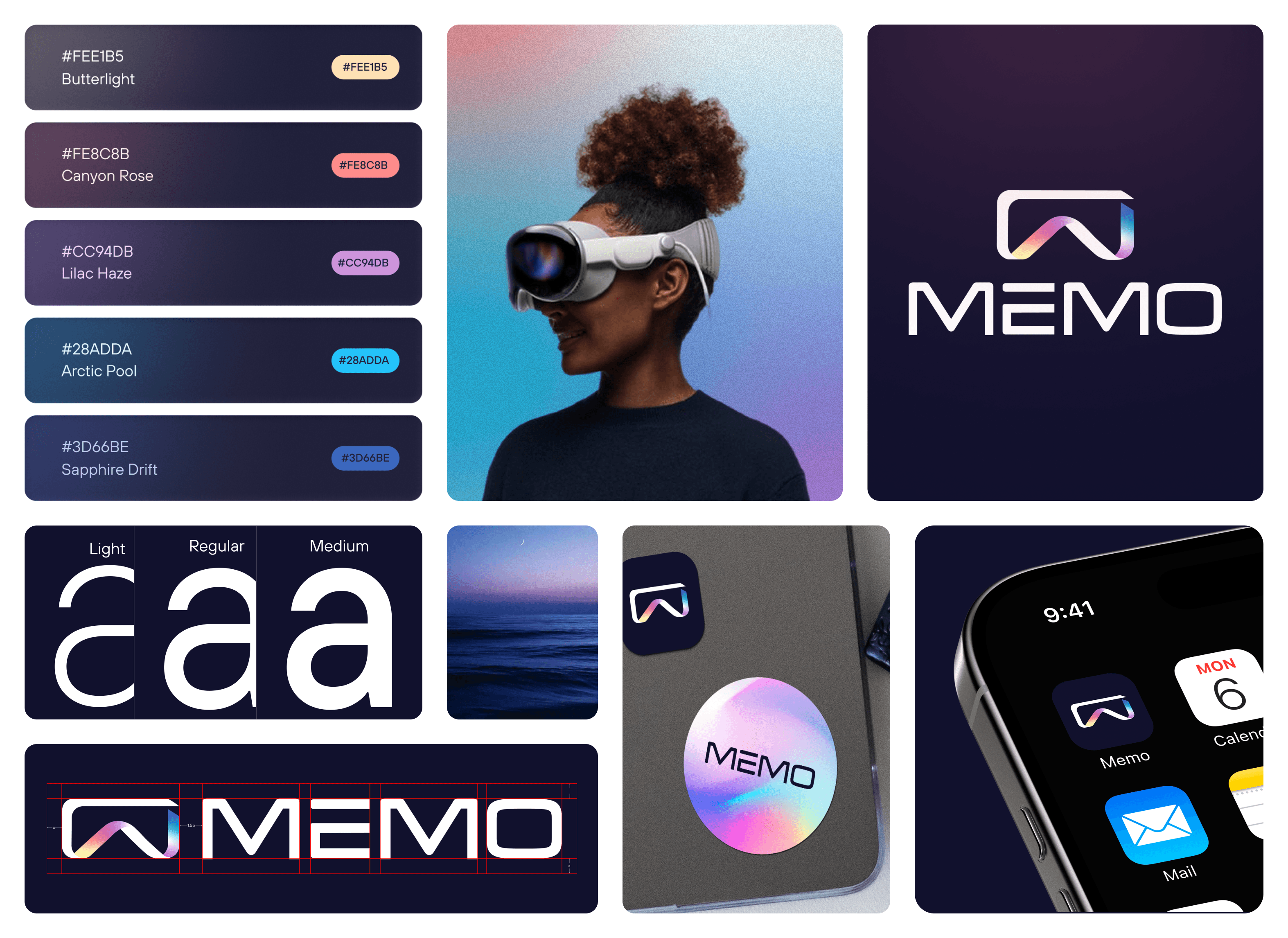
The Memo logomark draws from two sources: the letter M for memories, and the form of a VR headset. The shape is fluid and ribbon-like because memories are not static. They shift, evolve, and come back differently each time.
The soft gradient across the mark brings in the emotional layer: warmth, nostalgia, and the particular quality of light that lives in memory.
The color palette is named after the tones of a calm evening. Butterlight. Canyon Rose. Lilac Haze. Arctic Pool. Sapphire Drift. The palette moves from warm to cool, reflecting how memories shift between clarity and feeling.
The typeface is TT Hoves Pro. Clean geometry and balanced proportions that let the emotional content of the app take center stage without visual noise.
The identity extends across every touchpoint: app icon, packaging, browser tab, iPhone home screen. Wherever you encounter Memo it feels like one system.
the INTERFACE
Memo lives across two surfaces. The design had to work on both without feeling like a different product on each.
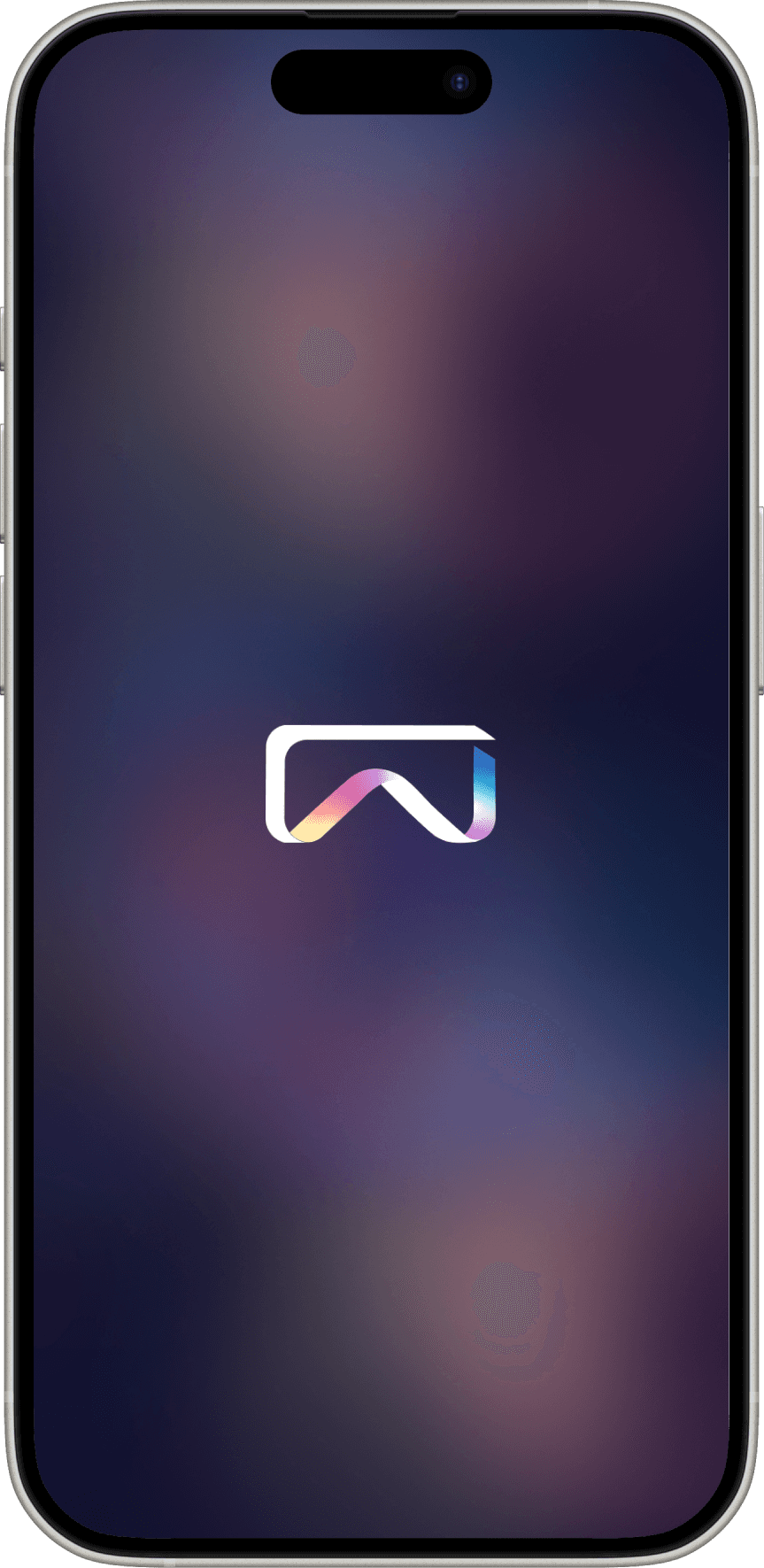
On mobile, the experience is built around capturing and creating. The home screen is personalized from the start. The editor opens in one tap. From there users upload from their gallery, take a photo, or describe what they want to create in their own words. The interface is dark and deliberately uncluttered because the content is the focus, not the chrome around it.
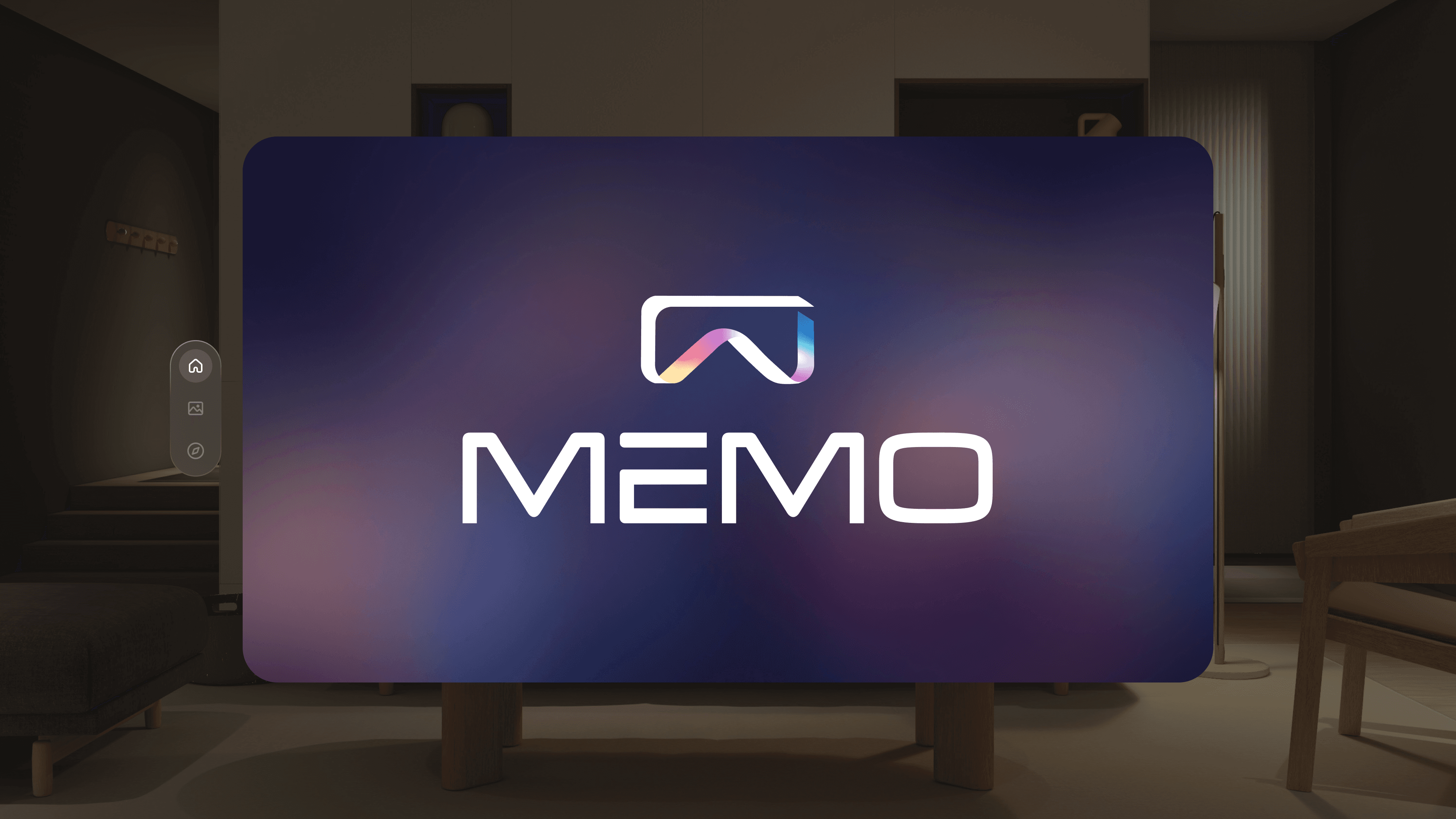
On Vision Pro the interface becomes spatial. It floats in your physical environment, anchored against the room you are actually sitting in. The home screen surfaces trending memories and friend activity. The gallery separates videos, experiences, and content shared with you. When you enter a memory, the interface steps back entirely and the moment fills your field of view.
Every element needed to be sized, spaced, and positioned with that in mind. Distance is a design variable. What felt natural on a screen had to be completely reconsidered for space.
reflections
Memo was the first time I designed for a platform where the interface itself is spatial. That forced me to question assumptions I had been carrying without realising them. On a screen, layout is two-dimensional and gravity is implicit. In a spatial environment everything floats. Getting that right required rethinking from the ground up.
The research grounded the work. The expert interview with David Pisoni was clarifying in a specific way: he pushed us to think about what spatial computing actually enables, rather than treating Vision Pro as a larger phone screen. The user interviews reminded us that the emotional stakes here are genuinely high. People do not just want a nicer way to store photos. They want to feel something again.
The Three E's stopped being a presentation framework about halfway through and started being actual decision filters. Every time something felt uncertain, running it through empathy, expression, and ethics produced a clearer answer.
The hardest work was restraint. When you are designing something this emotionally charged, the temptation is always to add more. The most important skill I practiced on Memo was knowing when to stop and let the memory carry the weight.
Memo was a classroom project designed with real-world constraints. All personas and user flows were created as design artifacts. The interviews conducted were with real participants and reflect genuine user needs.
Manasvi Shah © 2026